banner
뉴스
/뉴스 /

Smart Card and RFID Technology

Smart Card and RFID Technology

2026-08-11
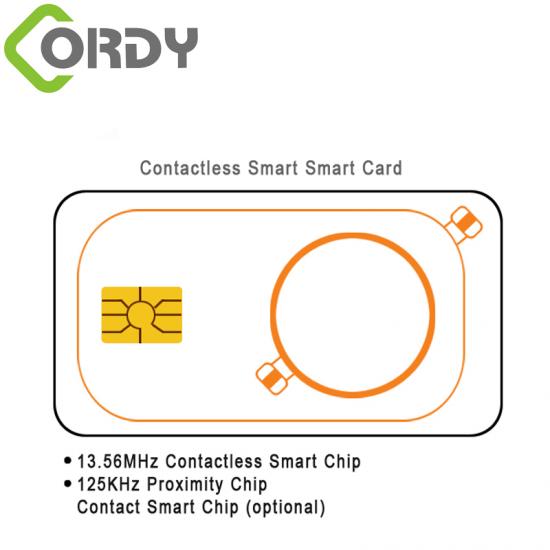
Smart Card and RFID Technology Smart cards are closely related to RFID technology, and high-frequency RFID is the core technology foundation of current mainstream smart cards. The two together form the core application system of non-contact automatic identification. 1、 Core Fundamentals of RFID Technology Basic definition: RFID, also known as radio frequency identification technology, is a non-contact automatic identification technology that uses radio waves to achieve target recognition and data reading and writing without aiming at the line of sight or physical contact. System composition: It consists of electronic tags (chip+antenna), readers, and antennas, with some systems paired with a backend data processing platform. Mainstream frequency band characteristics: Low frequency (125-134kHz): Strong penetration, reading distance of 0.1-1 meter, suitable for access cards and animal ear tags. High frequency (13.56MHz): Reading distance of 1-3 meters, supports simultaneous recognition of multiple tags, and is the core operating frequency band of smart cards. Ultra high frequency (860-960MHz): Reading distance of 3-10 meters, suitable for batch recognition scenarios such as logistics and warehousing. Tag classification: Passive tags are powered by readers, with low cost and long lifespan; The active tag comes with a built-in battery, which has a longer reading distance but requires regular battery replacement. 2、 Core points of smart card technology Definition and classification: Smart cards are cards with built-in microchips, divided into two categories: contact and non-contact. Most non-contact smart cards are based on high-frequency RFID technology. Core features: It has the characteristics of data encryption, large storage capacity, long service life, and wear resistance, and can achieve identity recognition, data storage, and interaction functions. Mainstream types: Common ones include ID card chips, bus cards, access cards, campus one card, etc., all of which use the 13.56MHz high-frequency RFID frequency band. 3、 The correlation and differences between the two Technical correlation: Non contact smart cards are a typical implementation form of RFID technology in identity recognition and small payment scenarios, and high-frequency RFID technology is the core support for smart cards to achieve non-contact reading and writing. Core Differences: Form difference: Smart cards are mostly in standard card form, while RFID tags have flexible forms and can be attached to various object surfaces. Functional focus: Smart cards focus on strong interaction scenarios such as identity authentication and secure payments, while universal RFID tags focus on object tracking and batch inventory scenarios. Working frequency band: Smart cards mainly use 13.56MHz high frequency, and RFID technology covers the full frequency range from low frequency to microwave. 4、 Typical application scenarios Identity authentication category: second-generation ID card, access card, campus one card, realizing fast identity verification and permission management. Transportation category: Bus card, ETC toll system, can complete fast toll collection without stopping. Industry management: Library management, drug traceability, medical equipment inventory, relying on RFID smart cards/tags to achieve full process automation management. Consumer payment category: urban transportation card, small consumption one card, relying on the encryption characteristics of smart cards to ensure payment security.
메시지를 남겨주세요 메시지를 남겨주세요
당신은 질문이있는 경우, 메시지를 남겨주세요, 우리는 곧 회신 해 드리겠습니다.